


XB
How can the charge and discharge efficiency of a lithium battery pack be improved?
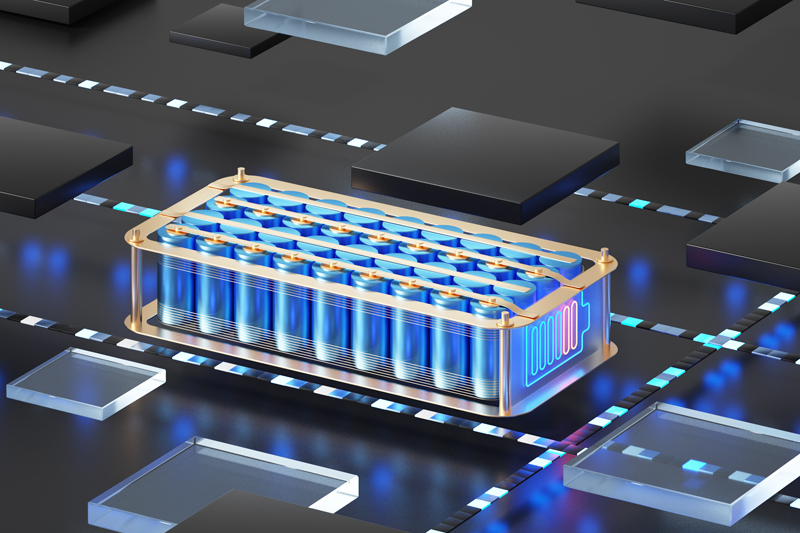
The charging and discharging efficiency of lithium battery packs is one of the key factors affecting their performance and lifespan. Improving charging and discharging efficiency can not only extend the service life of the battery pack, but also improve energy utilization and reduce usage costs. The following discusses how to improve the charging and discharging efficiency of lithium battery packs from multiple aspects.
1. Optimize battery materials
Battery materials are the basis for determining the performance of lithium batteries. By improving the cathode, anode, electrolyte, and separator materials, the charging and discharging efficiency of the battery can be significantly improved.
1.1 Cathode material
The cathode material is one of the core components of lithium batteries. Currently, commonly used cathode materials include lithium iron phosphate (LiFePO₄), ternary materials (such as NCM, NCA), etc. To improve charging and discharging efficiency, the following methods can be employed:
- Improved Conductivity: Improve the conductivity of cathode materials by doping or coating them with conductive materials, such as carbon materials, to reduce internal resistance.
- Optimize particle structure: Reduce the particle size of the cathode material and increase the specific surface area, thereby improving the diffusion rate of lithium ions.
- Development of new cathode materials: such as lithium-rich manganese-based materials, high-nickel materials, etc., which have higher energy density and better electrochemical properties.
1.2 Anode materials
The choice of anode material is equally important. Currently, commonly used anode materials include graphite, silicon-based materials, etc. To improve charging and discharging efficiency, the following measures can be taken:
- Improved Graphite Anode: Improve graphite's conductivity and lithium-ion diffusion rate through surface modification or doping.
- Development of silicon-based anode: Silicon-based materials have higher theoretical specific capacity but have volume expansion issues. Through nano-processing or compounding, this problem can be alleviated and the cycle stability can be improved.
- Use of new anode materials: such as lithium titanate (Li₄Ti₅O₁₂), which has excellent cycling performance and safety, and is advantageous in some applications despite its lower energy density.
1.3 Electrolyte
The electrolyte is the medium through which lithium ions are transported between the positive and negative electrodes. To improve charge-discharge efficiency, the electrolyte formulation can be optimized:
- Improve ionic conductivity: Reduce the resistance of the electrolyte by selecting highly conductive lithium salts (such as LiPF₆) and solvents (such as carbonates).
- Adding functional additives: such as film-forming additives, flame retardants, etc., can improve the stability and safety of the electrolyte.
- Development of solid-state electrolytes: Solid-state electrolytes have higher safety and ionic conductivity, which is an important direction for the development of lithium batteries in the future.
1.4 Diaphragm
The main function of the separator is to prevent direct contact between the positive and negative electrodes while allowing lithium ions to pass through. To improve charging and discharging efficiency, the performance of the separator can be optimized:
- Improved Porosity and Uniformity: By improving the preparation process of the separator, its porosity and uniformity are improved, thereby reducing the resistance of lithium ion transport.
- Development of new separator materials: such as ceramic separators, polymer-ceramic composite separators, etc., which have better thermal stability and mechanical strength.
2. Optimize battery design
In addition to material optimization, battery design is also an important factor affecting charging and discharging efficiency. By improving the structure and process of the battery, the performance can be further improved.
2.1 Electrode design
The design of the electrode directly affects the internal resistance and lithium ion transport efficiency of the battery. The following measures can be taken:
- Optimize Electrode Thickness: Electrodes that are too thick can increase the transmission distance of lithium ions, leading to increased internal resistance. By optimizing the electrode thickness, a balance between energy density and charge-discharge efficiency can be found.
- Improved Electrode Uniformity: Improve electrode uniformity by improving the coating process, reducing local hot spots and lithium dendrite formation.
- Increase the proportion of conductive agent: Appropriately increasing the proportion of conductive agent can improve the conductivity of the electrode and reduce the internal resistance.
2.2 Battery pack design
At the battery pack level, charging and discharging efficiency can be improved by:
- Optimize battery arrangement: Reduce the internal resistance and thermal resistance of the battery pack through reasonable battery arrangement and connection methods.
- Enhance thermal management: Control the operating temperature of the battery pack by designing efficient thermal management systems (such as liquid cooling, air cooling, etc.) to avoid performance degradation caused by high temperatures.
- Equalization Management: Implement balanced management of battery packs through the battery management system (BMS) to ensure that the charging and discharging states of each single battery are consistent, avoiding overcharging or over-discharging.
3. Optimize charging and discharging strategies
Charging and discharging strategies have a significant impact on the efficiency and lifespan of lithium battery packs. By optimizing the charge/discharge parameters, performance can be significantly improved.
3.1 Charging Strategy
- Constant Current and Voltage Charging (CC-CV): This is currently the most commonly used charging strategy. By reasonably setting the parameters of the constant current and constant voltage stages, charging efficiency can be improved and battery life can be extended.
- Pulse Charging: Pulse charging can reduce polarization effects and improve charging efficiency. Through intermittent charging, the internal resistance and temperature rise of the battery can be reduced.
- Intelligent charging: Intelligent charging strategies based on battery status (such as SOC, temperature, etc.) can dynamically adjust charging parameters according to actual conditions to improve charging efficiency and safety.
3.2 Discharge strategy
- Current Limiting Discharge: By limiting the discharge current, the internal resistance and temperature rise of the battery can be reduced, improving discharge efficiency.
- Intelligent Discharge: An intelligent discharge strategy based on battery status, which can dynamically adjust discharge parameters according to load demand, avoiding over-discharge and overload.
4. Enhance battery management
Battery management systems (BMS) play a crucial role in improving the charging and discharging efficiency of lithium battery packs. By precisely monitoring and controlling battery status, battery performance can be optimized.
4.1 State Estimation
- SOC Estimation: By accurately estimating the battery's state of charge (SOC), charging and discharging strategies can be optimized to avoid overcharging or over-discharging.
- SOH Estimation: By estimating the battery's state of health (SOH), charge-discharge parameters can be adjusted in a timely manner, extending battery life.
4.2 Equilibrium management
- Active Balancing: Active balancing technology ensures the consistent SOC of each cell and avoids degradation in battery pack performance.
- Passive equalization: Achieving passive equalization of battery packs through resistive discharge and other methods, although the efficiency is lower, the cost is lower.
5. Environmental control
The performance of lithium batteries is greatly affected by ambient temperature. By controlling the working environment of the battery pack, the charging and discharging efficiency can be improved.
5.1 Temperature control
- Constant temperature environment: Controlling the operating temperature of the battery pack within a range (usually 15-35°C) can significantly improve charging and discharging efficiency.
- Thermal Management: By designing an efficient thermal management system, heat can be quickly dissipated or heated, avoiding performance degradation caused by too high or too low temperatures.
5.2 Humidity control
- Moisture Prevention Measures: Lithium batteries are sensitive to humidity, and excessive humidity can lead to electrolyte breakdown or internal short circuits. By taking measures to prevent moisture, it is possible to maintain a dry environment inside the battery pack.
Conclusion
Improving the charging and discharging efficiency of lithium battery packs requires comprehensive consideration from multiple aspects such as materials, design, strategy, management and environment. By optimizing battery materials, improving battery design, optimizing charge-discharge strategies, and enhancing battery management and controlling environmental conditions, the performance and lifespan of lithium battery packs can be significantly improved. With the continuous advancement of technology, the charging and discharging efficiency of lithium battery packs will be further improved, providing more efficient and reliable energy solutions for various application scenarios.
NAVIGATION
Send Us A Message
Please give us a message